Atomic Forces Behind Your Laundry
As a laundromat owner and a geospatial engineering physicist, I’m always fascinated by the microscopic forces at play in our washing machines and dryers. These machines may seem simple to operate, but there’s actually a lot of intricate science happening beneath the surface that helps you get your clothes sparkling clean. Today, let’s dive deeper into the atomic forces that make washing and drying so effective—and I promise, I’ll explain it in a way that makes you feel like a laundry pro.



Atomic Forces at Work in the Washing Machine
To understand how the washing machine gets your clothes clean, we need to break down the interactions at the atomic level. Clothes are made up of fibers, usually cellulose (cotton) or synthetic materials like polyester, which are themselves made up of molecules held together by atomic forces.
-
Hydrogen Bonding: Imagine water molecules as little magnets. They attract each other and the dirt and oils on your clothes. When the washing machine releases water, these molecules stick to the dirt particles, helping them break free from the fabric fibers. It’s kind of like when you try to scrub a dirty pan with soap and water—the soap reduces the “stickiness” of the grease, allowing it to lift away. The same thing happens in your washing machine, just on a much smaller scale.
-
Van der Waals Forces: These weak attractions between molecules are like the tiny tug-of-war happening at a microscopic level. The friction between your clothes when they tumble around in the washing machine drum boosts these forces. Think about how two people sliding past each other on a dance floor might gently push each other to create a little bit of space—that’s what’s happening between the dirt on your clothes and the fabric.
-
Surface Tension: Water is kind of like a clingy friend. It wants to stick together, creating droplets that resist breaking apart. But when you add soap (the detergent), it’s like introducing a helper that makes the water more “flexible,” allowing it to move through fabrics and reach the dirt more effectively. It’s similar to how oil and water don’t mix, but once you add dish soap to your greasy dishes, it helps everything blend together and get clean.
-
Electrostatic Forces: Have you ever rubbed a balloon on your hair and watched it make your hair stand up? That’s electrostatic force at work—where tiny charges attract or repel each other. Synthetics like polyester or nylon tend to hold onto dirt in a similar way. The movement in the washing machine helps break those bonds, allowing dirt to be rinsed away, just like how you’d clear away static by touching a metal object.
Atomic Forces in the Dryer: Evaporation and More
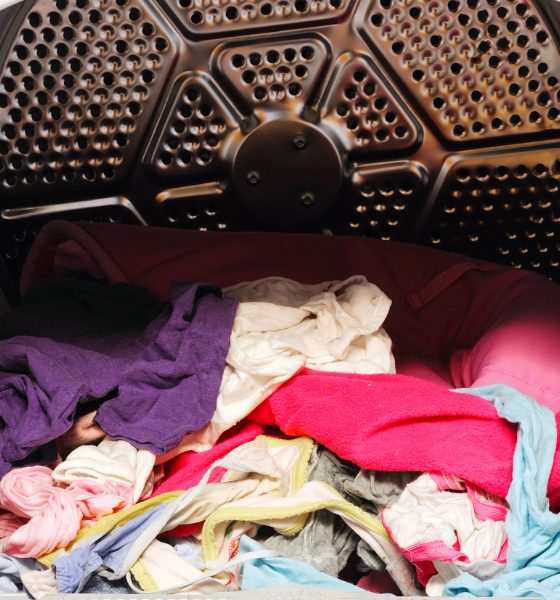
Now, let’s talk about the dryer and how it uses atomic forces to remove moisture from your clothes. This is where the magic of heat and movement comes into play.
Evaporation: Imagine you’re standing outside on a hot day with a cold drink. If you spill some of it, the liquid starts to disappear into the air. That’s evaporation in action—just like what happens in your dryer when heat makes the water molecules in your clothes speed up, break away, and turn into steam. The heat is like a tiny energy boost that pushes the water out of the fabric and into the air
Heat and Molecular Vibration: Picture a pot of water on the stove. As the heat rises, the molecules in the water start moving faster, and eventually, they turn into steam. In the dryer, when hot air touches the fibers in your clothes, the heat causes those molecules to vibrate. It’s like when you jump up and down to shake something loose. The faster those molecules vibrate, the quicker the moisture is expelled from your clothes.
Condensation and Phase Change: The water vapor you see as steam isn’t gone for good. It moves out of the dryer, cools off, and turns back into liquid water in the vent. Think about how foggy windows can clear up when the air temperature drops—this is condensation at work. Just like how moisture collects on a cold glass, the dryer uses the vent system to collect the vapor and return it to liquid form, keeping your dryer dry and making the whole process more efficient.
Knowing how atomic forces work in the washing machine and dryer allows you to use these machines more effectively, improving both efficiency and cleaning power. Here are a few tips that’ll make you feel like a laundry scientist in no time:
How to Optimize Atomic Interactions for Best Results
Knowing how atomic forces work in the washing machine and dryer allows you to use these machines more effectively, improving both efficiency and cleaning power. Here are a few tips that’ll make you feel like a laundry scientist in no time:
-
Use the Right Detergent: Think of detergent as the secret weapon in your cleaning arsenal. Just like a good scrubbing brush or sponge helps remove tough grease, the surfactants in detergent break down surface tension in water, helping it interact more easily with dirt. It’s the detergent’s job to be the “helper” that breaks down dirt and grime so the water can wash it all away.
-
Don’t Overload the Machine: Overloading the washing machine is like trying to run a race with a backpack full of rocks—you won’t move as efficiently. Your clothes need space to move freely inside the drum so the atomic forces can work. If you crowd your laundry, the agitation process becomes less effective, meaning your clothes won’t come out as clean.
-
Sort Clothes by Fabric: Different fabrics behave differently. Cotton fibers, for example, are great at soaking up water, while synthetics tend to hold onto dirt through static forces. When you sort your laundry, it’s like giving each fabric type its own personalized cleaning plan—helping the washing machine’s atomic forces work at their best.
-
Use Proper Dryer Settings: Think of your dryer like a fast-moving train. You want it to move at just the right speed to dry your clothes effectively without causing wear and tear. Lower heat settings help reduce damage, while high heat helps get rid of moisture quickly. Picking the right setting helps balance the drying time and fabric care, ensuring your clothes stay fresh and undamaged.
Conclusion: The Science of Clean Clothes at Your Laundromat
Understanding the atomic forces at play in your washing machine and dryer can make a world of difference in how effectively you clean and dry your clothes. From the hydrogen bonds that break down dirt to the evaporation of moisture in the dryer, these microscopic interactions are what make your laundry routine a success.
It’s kind of like understanding how gravity works to make a ball fall to the ground. You don’t need to know every detail, but once you grasp the basics, you can make better choices—like choosing the right detergent or drying settings to get your clothes clean in the most efficient way.
So, the next time you visit your laundromat, think about all the forces at work behind the scenes. It’s not just about tossing your laundry into a machine; it’s about harnessing the power of atomic physics to get the best results.
Ready to put your new knowledge to use? Head to your nearest laundromat and get the most out of your laundry day with these tips! You’ll not only have clean clothes, but you’ll feel like a physicist of the laundry world.